19.11.2026
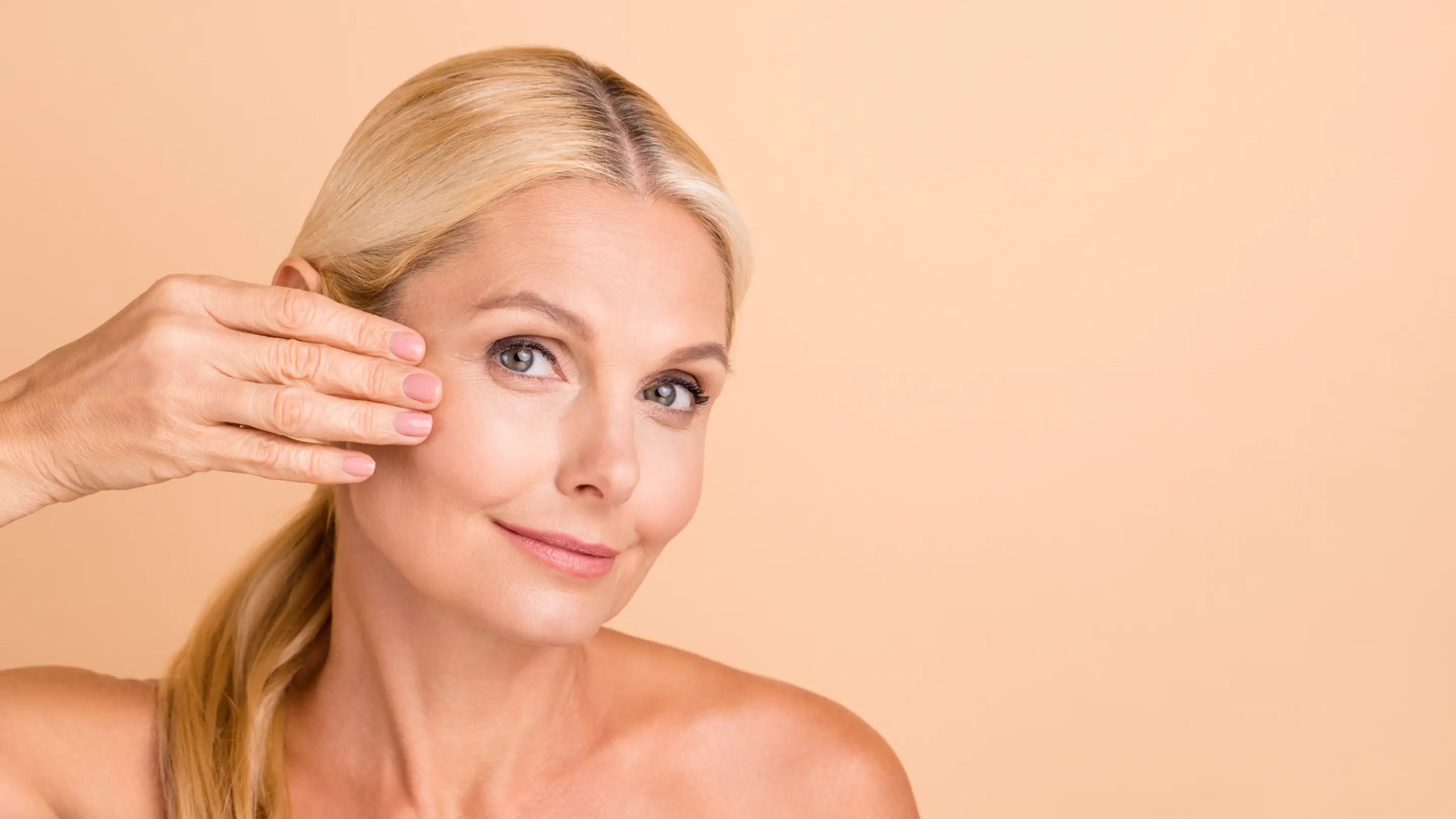
Nasolabial folds run from the sides of the nose to the corners of the mouth, while marionette lines extend downward from the corners of the mouth. Both are typically caused by volume loss, sagging tissue, and decreased skin elasticity. The appropriate treatment depends on the specific findings: options range from hyaluronic acid injections to a facelift.
Over the years, the entire midface changes. The fatty tissue in the cheeks loses volume, the cheeks sag, and the tissue shifts toward the corners of the mouth. There, the natural boundary between the cheek and the upper lip becomes visible as a deep furrow.
Additional factors include decreased skin elasticity, facial expressions, genetic predisposition, as well as UV radiation, smoking, and lack of sleep. Connective tissue also plays a role: ligaments anchor the soft tissues to the bone and maintain the facial contour. A recent review article describes three different types of nasolabial folds, each with its own causes, and emphasizes that age-related changes in the skin and connective tissue vary depending on the facial region (Hong et al., 2024).
A nasolabial fold is rarely just a skin problem. Most often, it is the visible sign of a change in the underlying tissue.
The desire to remove a nasolabial fold is understandable. Strictly speaking, however, a fold can usually only be softened, not completely eliminated. And whether it can be softened depends on what causes it.
If only the groove is filled in, even though the actual loss of volume is located higher up in the midface, an unnatural appearance can easily result. Although the crease appears flatter, the area around the mouth and nose can look heavier and puffier. For this reason, the specialists at Dr. Limbourg’s practice first assess facial expressions, skin texture, and volume distribution throughout the entire face before selecting a treatment method.
A common approach is therefore to first restore volume to the cheeks and then, if necessary, treat the crease specifically. On the treatment page for nasolabial folds, the practice explains that, upon request, filler injections for the crease can be combined with a gentle volume-enhancing treatment for the cheeks.
The key factor is the cause of the wrinkle, not just its depth.
Depending on the severity, different procedures may be considered. The following overview summarizes the principles. It is not a substitute for an examination, as findings and preferences vary from person to person.
| Procedures | Principle | Particularly suitable for | Notes |
| Hyaluronic acid fillers | The gel fills the furrow and restores volume | mild to moderate wrinkles, early signs of volume loss | Outpatient procedure, no general anaesthesia required; results typically last 6 to 12 months, after which the treatment can be repeated |
| Biostimulation (e.g., injections to improve skin quality) | stimulates the skin to become firmer | For thin skin and diminished elasticity | Effects build up gradually; study results vary depending on the product |
| Autologous fat transfer (nano-fat) | The body’s own fat compensates for volume loss | Significant volume loss in the midface | Fat harvest required; return to social activities after about 7 to 14 days, according to the clinic |
| Thread lift | Threads support and reposition tissue | Mild to moderate tissue sagging | Limited effect; suitability depends on the findings |
| Facelift | Tissue is surgically tightened and repositioned | Significant sagging of the midface and cheeks | Surgical procedure requiring anesthesia and recovery time |
Hyaluronic acid. Hyaluronic acid fillers are biocompatible and biodegradable. The clinic reports a treatment duration of about 30 minutes and typically little to no downtime. An anaesthetic cream can be applied beforehand upon request.
Biostimulation. This includes injections that stimulate skin remodelling. The effect is not immediate but builds up over several weeks. You can find a more detailed overview in our article on Sculptra and achieving a fresh glow rather than a plumped-up appearance.
Autologous Fat. In an autologous fat transfer, the body’s own fat tissue is harvested, processed, and injected into the desired areas using fine cannulas. Since no foreign material is used, this procedure is an alternative to synthetic fillers.
Thread lift and facelift. If the primary issue is sagging tissue, fillers alone are often insufficient. We discuss in detail whether a thread lift is sufficient or if a facelift is the more viable solution in the article “Thread Lift or Facelift.”
The more pronounced the tissue sagging, the more likely it is that skin-tightening procedures will be the preferred option. The more significant the volume loss, the more likely it is that fillers will be considered.
Marionette lines start at the corners of the mouth and run toward the chin. They can give the face a tired or sad expression, even when you’re actually feeling differently. Their causes overlap with those of nasolabial folds: loss of volume, tissue sagging, and decreased skin elasticity.
The difference lies in the anatomy. The tissue at the corners of the mouth is mobile and lies close to other structures, such as the chin and cheek areas. When treating marionette lines, it is therefore often crucial to assess the entire lower half of the face, including cheek sagging and the chin contour. Clinics explicitly list marionette lines as an indication for hyaluronic acid treatment. In cases of pronounced sagging, a tightening treatment may also be beneficial.
Nasolabial folds and marionette lines are often assessed and treated together.
The following guidelines describe how specialists typically proceed. They are not intended for self-diagnosis and are no substitute for a personal examination.
Please note: The decision regarding which treatment is appropriate is made during a personal consultation following an examination. Previous treatments, pre-existing conditions, and your expectations are taken into account.
The findings determine the method, not the other way around.
The process begins with a personal consultation. The specialists analyze your facial expressions and skin condition, discuss your goals, and explain which options are suitable for your specific situation and which are not.
Hyaluronic acid injections are performed on an outpatient basis, as specified by the practice; the procedure takes about 30 minutes and does not require general anaesthesia. The injections are administered using fine needles or blunt cannulas. An anaesthetic cream is available upon request. The results are usually visible immediately and may change slightly over the following days because the hyaluronic acid binds water. Surgical procedures, such as a facelift, are performed in collaboration with the Sophienklinik Hannover.
A thorough analysis and a clear plan of action will give you peace of mind before you make your decision.
Too much filler can make the face look heavy, wide, or unnatural. Carefully planned treatments are therefore carried out in stages: it’s better to start with small amounts and add more as needed than to inject too much at once. The practice emphasises that facial expressions should be preserved.
Safety is also important. Vascular occlusions following filler injections are considered rare but can have serious consequences. A review study with a meta-analysis of 93 case reports concludes that practitioners should have a solid understanding of anatomy (Sito et al., 2019). Therefore, the choice of the treating specialist is just as important as the choice of the product.
Possible side effects include redness, swelling, and bruising, which usually subside after a few days. If you experience severe pain, skin discoloration, or vision problems after an injection, you should seek medical attention immediately.
Less is more—but with precision: A natural result comes from careful planning, restraint, and anatomical expertise.
For hyaluronic acid treatments, the clinic states that the effects typically last 6 to 12 months. The gel is gradually broken down by the body, so touch-ups are possible but not required. How long the results actually remain visible depends on metabolism, the treatment area, and facial expressions. According to the practice, autologous fat is largely permanently integrated into the tissue, while thread lifts and facelifts address tissue structure and sagging.
Prevention has its limits. Consistent sun protection, avoiding smoking, and getting enough sleep support the skin. These measures slow down tissue ageing, but they cannot stop it.
No result lasts forever. Realistic expectations are the best foundation for making a good decision.
Nasolabial folds and marionette lines usually have multiple causes. That’s why it’s important to consider not just the wrinkle itself, but the entire face. At Dr. Limbourg’s practice in Hanover, our board-certified specialists in plastic and aesthetic surgery will consult with you personally and without any time pressure. Together, we’ll determine what is appropriate and feasible for your specific situation—and what isn’t.
You can schedule a consultation online or by phone. You can take your time to decide whether or not to proceed with treatment.
Whether you’re looking for a change, a correction, or a fresh start—we’ll take the time to listen to you. During a one-on-one consultation, we’ll work together to determine what’s possible and what’s truly right for you. We’ll approach this with empathy, honesty, and as equals. Schedule your consultation today at our practice in Hanover.