08.10.2026


Anne Limbourg, M.D., Assistant Professor
Board-Certified Specialist in Plastic and Aesthetic Surgery
A facelift for men does not follow the same planning guidelines as for women. Thicker, more highly vascularized skin, facial hair in the surgical area, and a higher risk of postoperative bleeding require adapted incision techniques and aftercare. The goal is not a smoother face, but a masculine, well-defined face with a clear jawline hand a firm neck.
On average, men’s facial skin is thicker and has a richer blood supply than women’s skin. This means:
These differences directly influence both the surgical technique and the postoperative care recommendations immediately following the procedure.
The hairy area in front of and below the ear requires particularly careful planning of the incision. If the scar is placed in an unfavorable location, hairy skin may be displaced behind the hairline or into the hairless area behind the ear—resulting in a visible scar that is difficult to correct. Experienced surgeons therefore plan the incision along the natural hairline and tailor it individually to the direction of beard growth and the hairline.
In short: For men, the surgical incision is made in such a way that the beard area is preserved and no hair-bearing skin is displaced into inappropriate areas—one of the most technically challenging aspects of the entire operation.
A receding hairline or pronounced receding temples limit the classic temple haircut technique, as visible scars in the thinning hair area must be avoided. In such cases, alternative cutting techniques are used, such as shifting the cut to existing hairline boundaries or positioning it lower in the temple area.
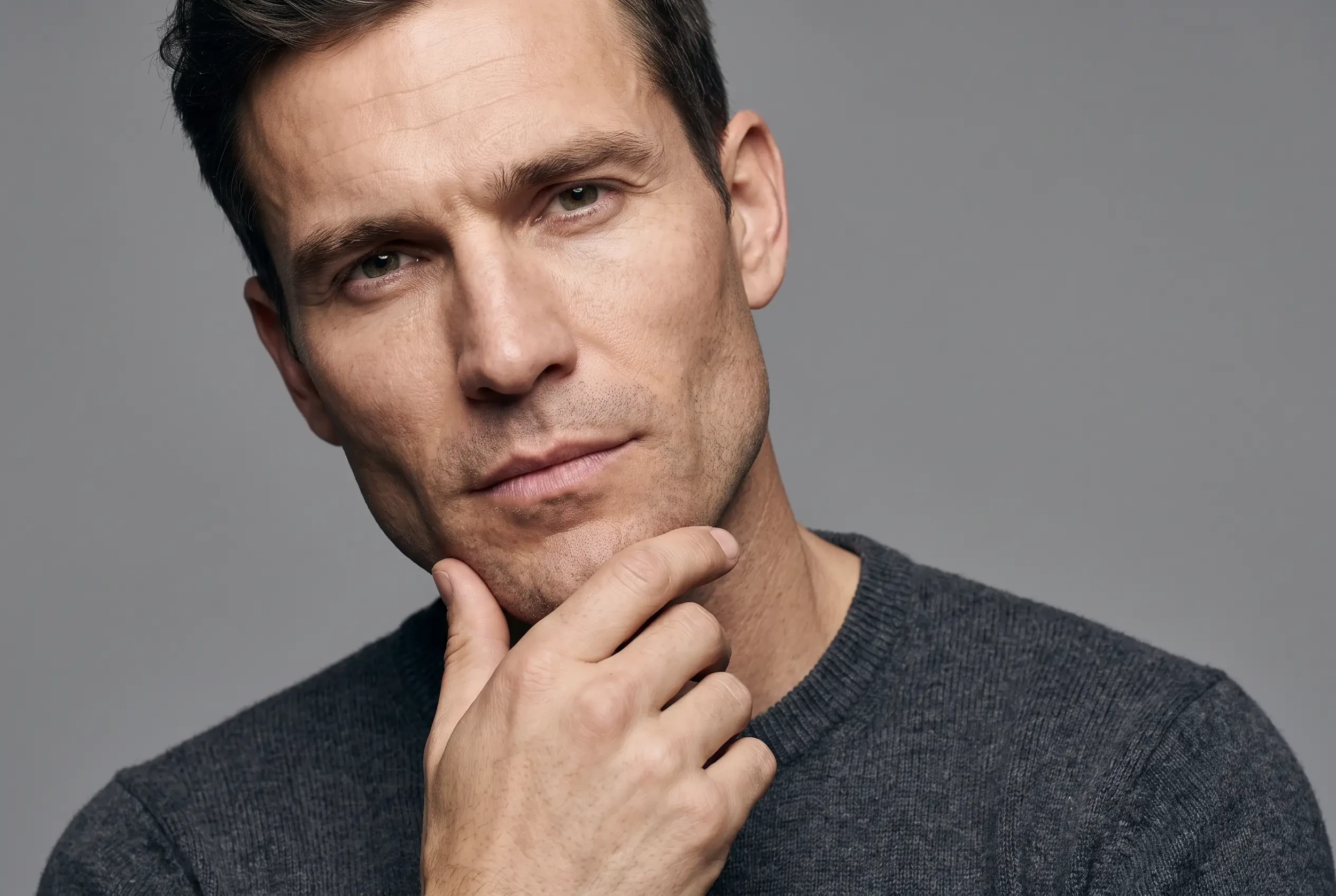
While the focus for women is often on cheek volume and the midface, for men it is primarily the jawline, the chin-to-neck angle, and the neck region that shape the impression of age. A facelift for men therefore primarily aims to:
Because male skin has a higher blood flow, the risk of postoperative bleeding is greater than in women. This has practical implications: Blood-thinning medications and certain dietary supplements must be discontinued well in advance of surgery; monitoring blood pressure during the first 24 hours is crucial; and elevating the head and applying cold compresses are employed more consistently than in cases with a lower risk.
Visible swelling and bruising usually subside significantly within two to three weeks. Most patients plan for ten to fourteen days of recovery time before returning to social activities; light office work is often possible sooner, but strenuous physical activity should be avoided for a longer period.
A standalone facelift typically focuses on the cheeks and jawline. To achieve a harmonious overall result, many men combine the procedure with a neck lift (platysmaplasty) or eyelid surgery if drooping upper eyelids or under-eye bags make them look tired.
Are facelift scars visible on men?
When the incision is properly made—tailored to the beard line, jawline, and hairline—the scars are concealed within natural contours and are barely visible once healed.
Is the risk of postoperative bleeding really higher in men?
Yes, due to the increased blood flow in men’s facial skin, the risk is higher compared to women, but it can be well managed through careful preparation and postoperative monitoring.
How long will I be off work?
Most men plan for ten to fourteen days until they look presentable in public, depending on the healing process and their professional requirements.
Can a facelift make a man look too feminine?
No, when planned by an experienced surgeon, the result is specifically tailored to masculine proportions—such as a defined jawline—rather than simply smoothing out the skin.
At what age does a facelift make sense for men?
This depends less on age than on the individual’s skin condition and degree of sagging; typically, the age range is between 45 and 65 years.
Whether you’re looking for a change, a correction, or a fresh start—we’ll take the time to listen to you. During a one-on-one consultation, we’ll work together to determine what’s possible and what’s truly right for you. We’ll approach this with empathy, honesty, and as equals. Schedule your consultation today at our practice in Hanover.