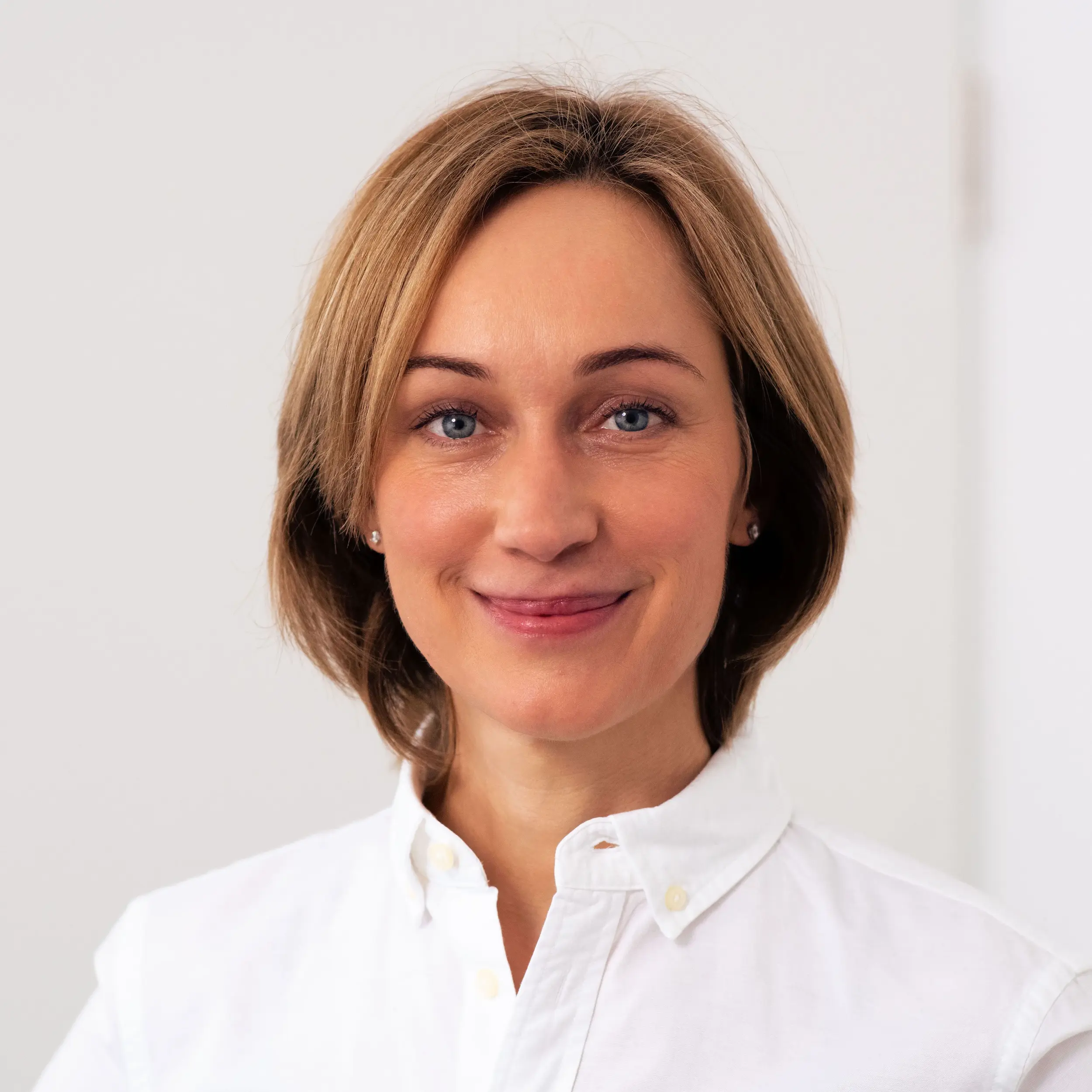
Anne Limbourg, M.D., Assistant Professor
Board-Certified Specialist in Plastic and Aesthetic Surgery
The VDÄPC seal of quality refers to the Association of German Aesthetic and Plastic Surgeons (VDÄPC)—a professional association whose full members hold the title of specialist in plastic and aesthetic surgery. This is more important than it sounds: The term “cosmetic surgeon” is not a protected designation in Germany and says nothing about a surgeon’s qualifications. The seal is therefore a helpful guide—but it never replaces a personal consultation with your surgeon.
Dr. Limbourg’s practice displays the VDÄPC Quality Seal 2025 on its website. Here, we explain what the VDÄPC is, what the seal stands for, and where its limitations lie.
The VDÄPC was founded on September 20, 1995, in Leipzig and is an affiliate of the German Society of Plastic, Reconstructive, and Aesthetic Surgeons (DGPRÄC). It sees itself as a professional and advocacy group for aesthetic and plastic surgeons. According to its own figures, it had 146 members as of October 2024.
To qualify for full membership, one must have earned the title of specialist in plastic and aesthetic surgery in Germany. The training required for this takes at least six years. In addition, there are fellow memberships for specialists who do not yet meet the criteria for full membership, as well as junior memberships for physicians in training.
This is precisely what distinguishes the VDÄPC from providers who simply call themselves “cosmetic surgeons”: This term is not protected—any physician may use it, regardless of their training.
Dr. Anne Limbourg has been a member of the VDÄPC since 2021.
The seal classifies a practice within the framework of this professional association. The VDÄPC’s professional and ethical principles are outlined in its mission statement. Among other things, it states:
What the seal is not: It is not a guarantee of a specific treatment outcome, nor is it a substitute for patient education, counseling, or the physician’s assessment in individual cases. It is an indication that a practice is part of a professionally demanding environment—and that the physicians are willing to be held to high standards.
In its checklist titled “How Do I Find the Right Specialist?”, the VDÄPC recommends paying attention to several points. The seal is one of them—but not the only one:
A quality seal provides guidance, but the actual assessment takes place during the consultation. So ask questions until you feel well-informed—a qualified surgeon expects this. Here are some helpful examples:
Especially when it comes to planned procedures, you shouldn’t let yourself be pressured into making a quick decision. This also means that a practice should be upfront about it if a procedure isn’t medically advisable. We also describe this approach in our article on modern plastic surgery.
Set aside enough time for the initial consultation and come prepared with your questions. It’s also helpful to bring records of any pre-existing conditions, medications you’re currently taking, and previous surgeries so that the surgeon can fully assess your situation.
Part of the VDÄPC’s work involves compiling annual treatment statistics. To this end, the association surveys its members about the treatments they provide and publishes the results. The latest edition, the 2025 Treatment Statistics, was released in March 2026. Here are some of the findings:
The figures are based on a survey of VDÄPC members and describe the market as a whole, not the results of individual practices.
For you as a patient, the seal doesn’t change a thing: what matters most is the conversation. During the consultation, we’ll discuss which procedure is appropriate for your diagnosis, what alternatives are available, what risks are involved, and whether treatment is even advisable for you. This also includes advising against procedures if they are not medically indicated.
The VDÄPC quality seal appears in the footer of our website next to the FOCUS award “Top Doctors 2026.” Both address different aspects: The FOCUS award is a list of recommendations, while the VDÄPC seal indicates our affiliation with a professional medical society. Surgeries are performed at the Sophienklinik, whose quality standards we have described elsewhere.
It refers to the Association of German Aesthetic and Plastic Surgeons (VDÄPC). Full members of the VDÄPC hold the title of specialist in plastic and aesthetic surgery.
No. The term is not protected in Germany and says nothing about a person’s qualifications. What matters is the specialty certification in Plastic and Aesthetic Surgery.
At least six years.
No. The seal does not represent a treatment outcome or a guarantee. Each treatment is planned individually, and results may vary.
There is a doctor search tool on the VDÄPC website.
The VDÄPC seal of quality is a helpful guide to identifying qualified plastic surgeons—in addition to their board certification, experience, and a detailed consultation. However, you’ll only feel truly confident after a personal consultation, during which your questions are answered and alternatives are openly discussed.
Would you like a consultation? Schedule an appointment at Dr. Limbourg’s practice in Hanover—we’ll take the time to answer your questions.
Whether you’re looking for a change, a correction, or a fresh start—we’ll take the time to listen to you. During a one-on-one consultation, we’ll work together to determine what’s possible and what’s truly right for you. We’ll approach this with empathy, honesty, and as equals. Schedule your consultation today at our practice in Hanover.