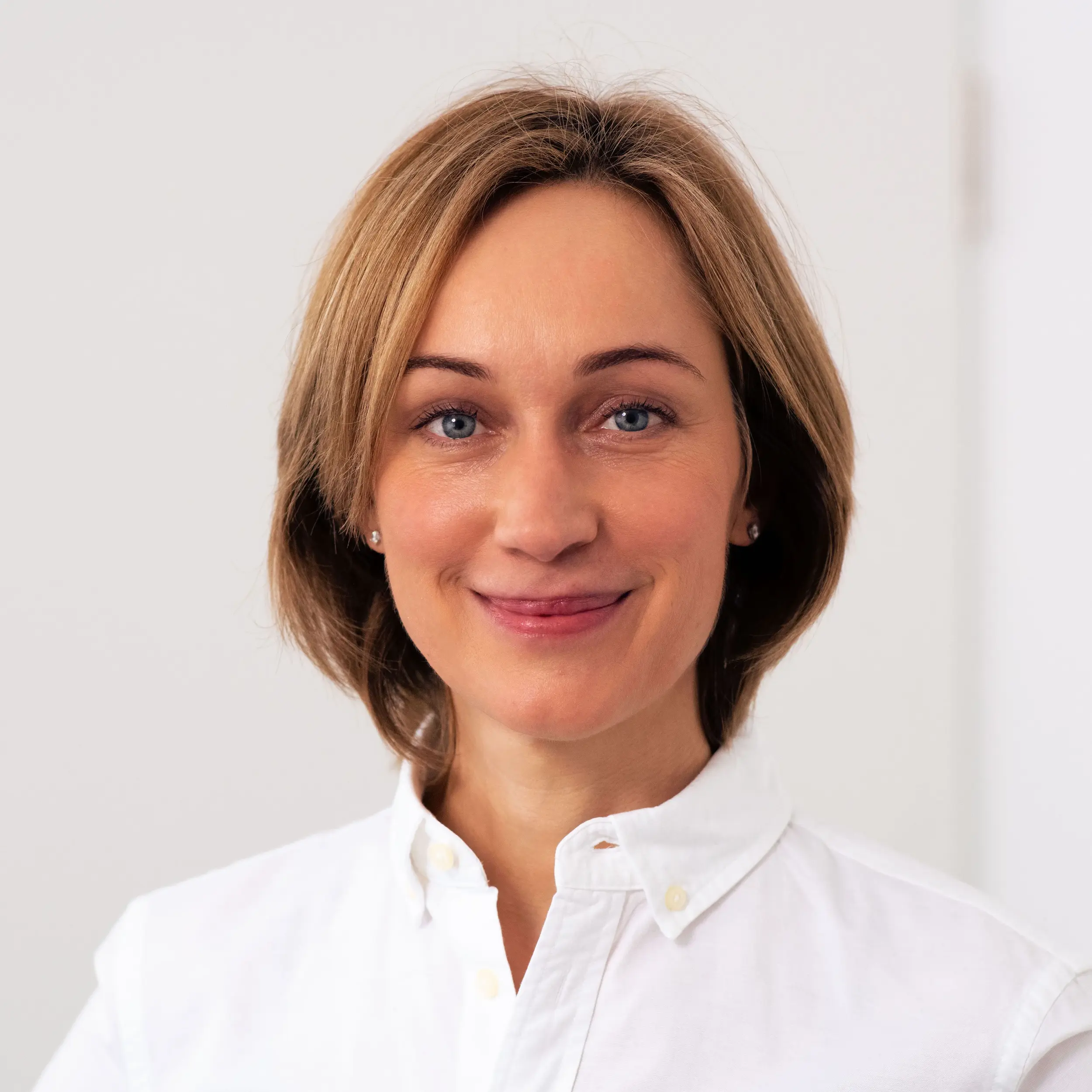
Anne Limbourg, M.D., Assistant Professor
Board-Certified Specialist in Plastic and Aesthetic Surgery
Breast lift with or without implants? The decision affects more than just the immediate appearance—it has direct biomechanical implications for the long-term stability of the results. Understanding the differences allows you to make a more informed choice.
When a breast has lost its firmness after pregnancy, breastfeeding, or weight loss, the same question often arises: Is a lift enough—or is an implant also needed? And what about autologous fat? The answer is medically more precise than many expect. It does not depend on personal taste, but on tissue properties, anatomical conditions, and long-term mechanical forces.
Priv.-Doz. Dr. med. Anne Limbourg, a specialist in plastic and aesthetic surgery in Hanover and a Focus TOP Physician for 2026, explains the most important decision-making criteria in this article—objectively, in a nuanced way, and without oversimplification.
Augmentation mastopexy combines two procedures in a single operation: The mastopexy corrects sagging skin and repositions the glandular tissue—the implant restores lost volume. The goal is a breast that appears both firmer and more voluminous.
This procedure is technically challenging because it pursues two mechanically opposing goals simultaneously: The implant pushes outward (increasing internal pressure), while the mastopexy suture gathers the tissue and lifts it upward. The tension of the sutures must be precisely matched to the weight of the implant—a matter of surgical experience, not chance.
In pure autologous tissue modeling, the existing glandular and fatty tissue is restructured, repositioned, and fixed under a tightened envelope. No foreign material is used. The volume remains the same—it is merely redistributed and lifted.
This approach is particularly suitable when sufficient native volume is present, but the shape and position are unsatisfactory. The technique places higher demands on the patient’s tissue quality, but offers the advantage that no implant-specific long-term risks arise.
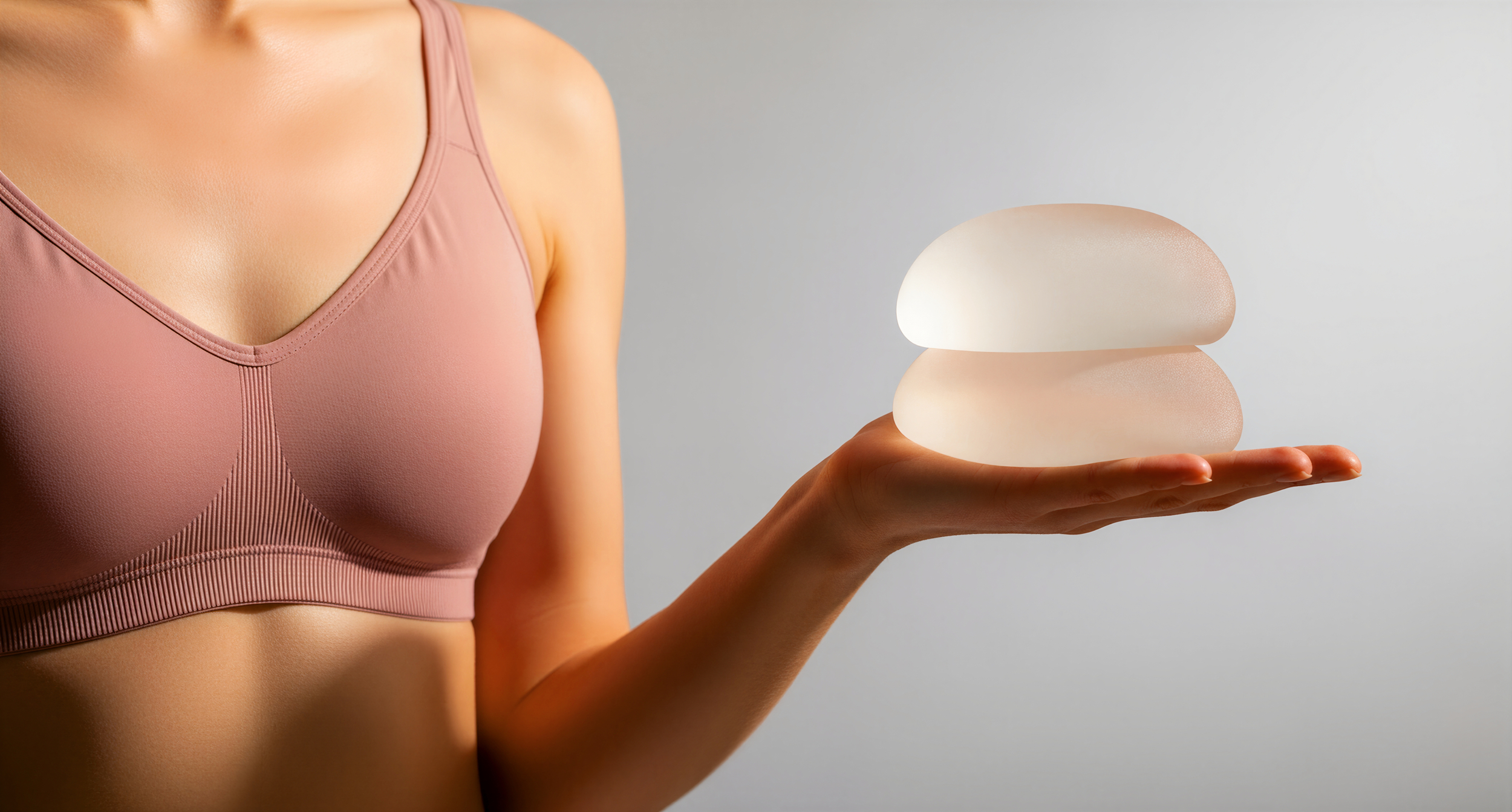
Breast implants weigh between 150 and 700 grams, depending on their size and filling. This weight exerts a constant downward pull—on the glandular tissue, the skin, and the suture structures that are intended to maintain the shape after a mastopexy.
The basic mechanical rule is: The heavier the implant, the greater the stretching of the surrounding tissue over time. This particularly affects the inframammary region (the area below the nipple) and the lower breast crease.
In patients whose skin already has reduced elasticity due to pregnancies, weight fluctuations, or genetic factors, an implant that is too heavy significantly accelerates the tissue’s natural aging process. The result is a shape that looks convincing at first—but signals the need for another correction years later.
Not every implant places the same strain on the tissue. The decisive factors are:
A differentiated implant selection—tailored to body type, tissue thickness, and individual tissue elasticity—is therefore an integral part of surgical planning. At Dr. Limbourg’s practice, this customization is performed using Crisalix 3D simulation and a detailed tissue analysis.
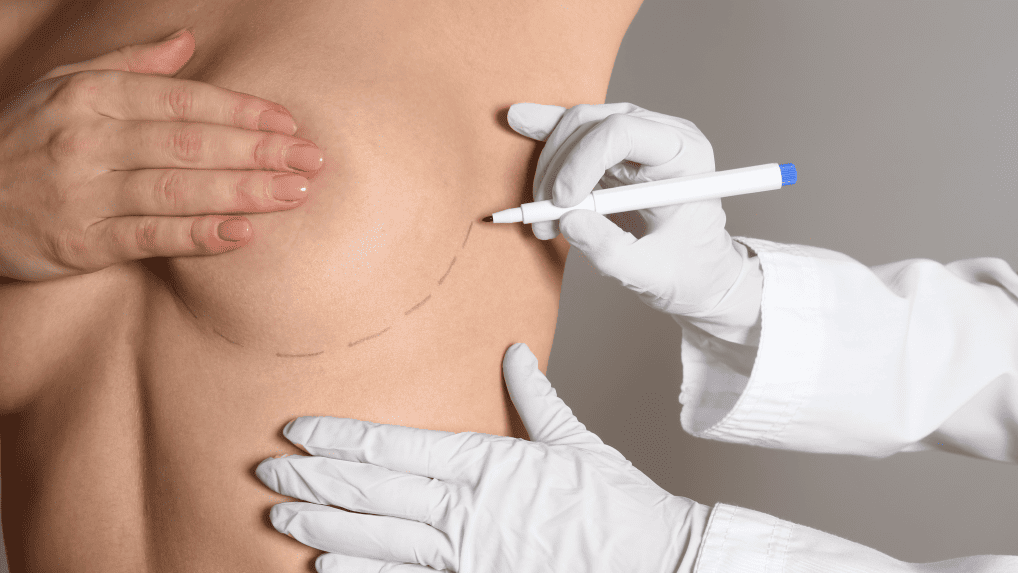
Secondary ptosis refers to the recurrence of breast sagging following a successful mastopexy—particularly when an implant was inserted at the same time. It is not a surgical complication in the traditional sense, but rather a long-term biomechanical process.
It occurs when:
The result is a mismatch between the implant position (which remains stable) and the sagging glandular and skin tissue—recognizable by the so-called “waterfall effect” or “double-bubble.”
Early signs of secondary ptosis include:
If these changes occur, a medical evaluation is advisable—not least because early correction is technically easier than a revision surgery that may be necessary later on.
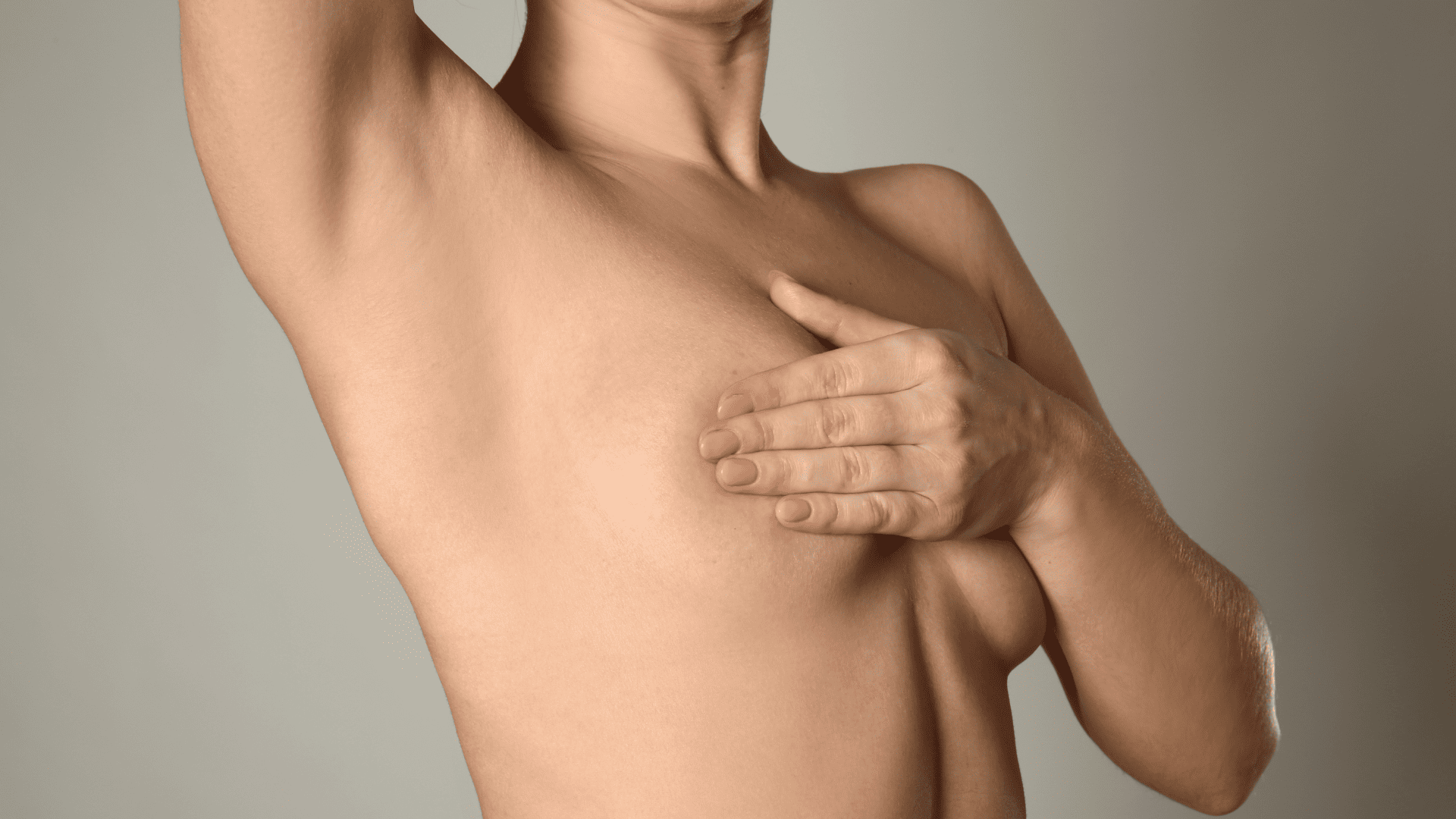
The transfer of the body’s own fat (lipofilling) to the breasts can be a useful complement to autologous tissue sculpting—or, in certain cases, an alternative to implants. It is particularly suitable for:
Another advantage: Autologous fat behaves mechanically like the body’s own tissue—it does not exert tension on sutures and does not interact with the tissue environment as a foreign body.
Autologous fat is not a universal solution. It is not an option if:
It should also be noted that a portion of the transferred fat (approx. 30–50%) is reabsorbed by the body. The long-term volume is therefore more difficult to predict than with an implant.
Hybrid breast augmentation combines a smaller implant with an autologous fat injection. The rationale: The implant provides the structural foundation and volume, while the autologous fat refines the shape, softly fills in transitions, and improves the tissue texture in the upper pole of the breast.
This combination allows for the selection of smaller implants—with correspondingly less mechanical stress on the tissue. The risk of secondary ptosis decreases because the weight of the implant is reduced.
From a biomechanical perspective, the hybrid approach is thus not merely an aesthetic compromise but often the more stable long-term solution. Whether it is suitable for a patient depends on the available fat volume, the skin envelope, and the desired size—and requires individualized planning during the consultation.
Can I have a breast lift without implants if I want more volume?
In some cases, yes—if there is sufficient natural glandular and fatty tissue present and the desired increase in volume is minimal. Autologous fat transfer is an option, though its volumizing effect is limited. An examination is necessary for a reliable assessment.
How long do the results of an augmentation mastopexy last?
That depends on several factors: implant size, skin quality, weight stability, and pregnancies after the procedure. A well-planned procedure with an implant tailored to the tissue can yield stable results for many years. Regular follow-up visits are recommended.
Can secondary ptosis be corrected after a breast lift?
Yes, in most cases. The earlier it is detected, the less invasive the correction will be. Options include a repeat mastopexy, an implant exchange (smaller or anatomically shaped implant), or a combination of both procedures.
Why can’t autologous fat replace all implants in a breast lift?
Autologous fat provides limited volume (depending on body fat percentage) and is subject to partial resorption. It is a valuable option for moderate changes—but it is not sufficient on its own for significant volume correction.
Which doctor performs these procedures at your practice?
Breast lifts and augmentation mastopexies are performed at our clinic by Priv.-Doz. Dr. med. Anne Limbourg and Dr. med. Kerstin Zindel—both specialists in plastic and aesthetic surgery with many years of experience in breast surgery. The surgery takes place at the Sophienklinik Hannover, Germany’s largest private hospital.
The choice between a breast lift with implants and autologous tissue reconstruction is not merely a matter of personal preference—it has biomechanical implications that significantly influence the long-term outcome. Implant weight, tissue elasticity, and the mastopexy technique must be coordinated to minimize secondary ptosis. Autologous fat is not a universal substitute, but a useful complement—especially in a hybrid approach.
The right solution for you can only be determined through a personal consultation and a thorough examination. We take the time to do this—without pressure and without pre-determined recommendations.
Whether you’re looking for a change, a correction, or a fresh start—we’ll take the time to listen to you. During a one-on-one consultation, we’ll work together to determine what’s possible and what’s truly right for you. We’ll approach this with empathy, honesty, and as equals. Schedule your consultation today at our practice in Hanover.